
 UAE
 Qatar
 Pakistan
 KSA
 Oman
 Kuwait
 Bahrain
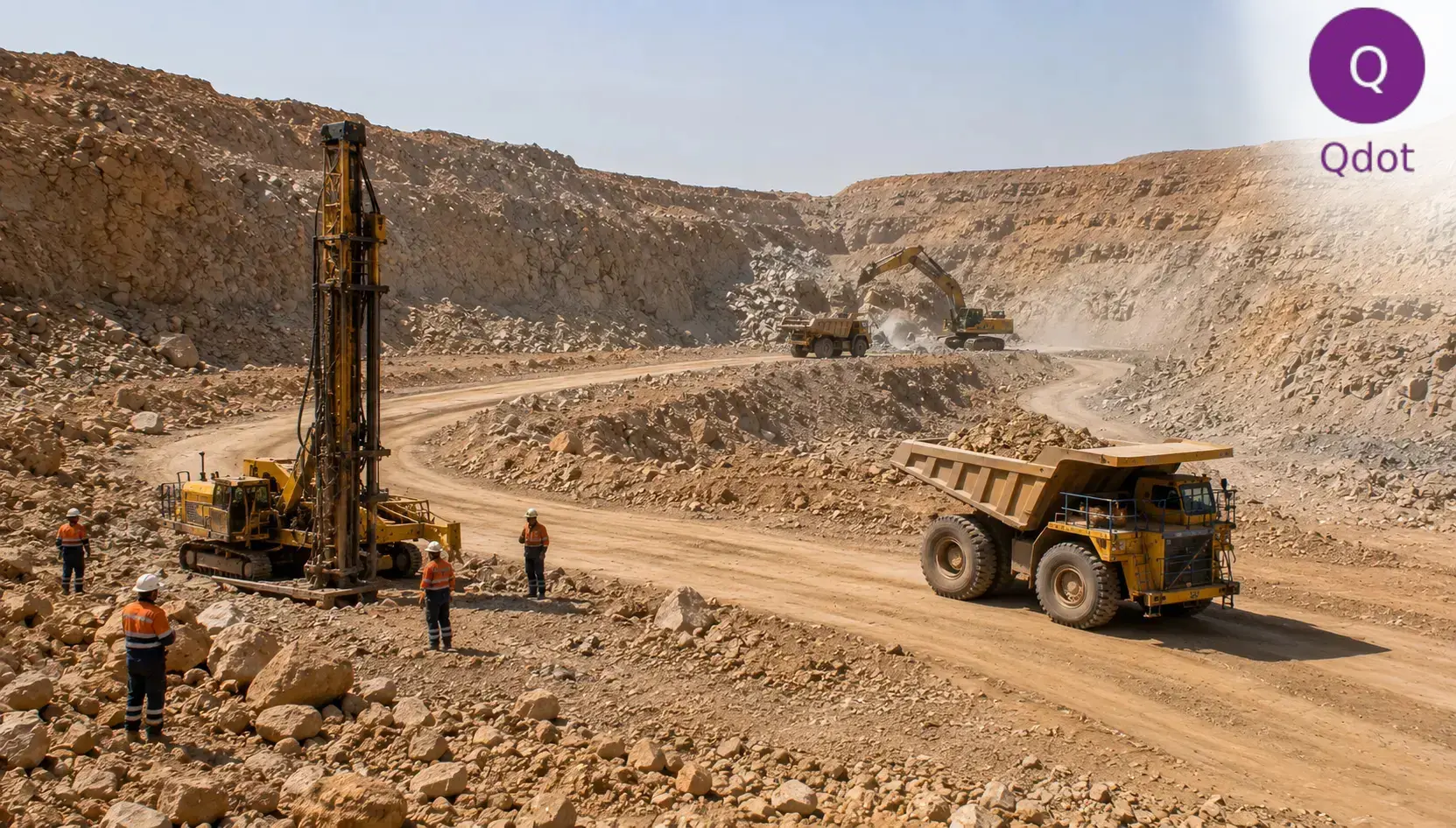
Mineral extraction is operationally demanding. Companies must manage equipment availability, material grades, worker exposure, transport movements and effects on surrounding land and communities. Qdot develops integrated management systems that connect these daily activities with quality, safety, environmental and energy objectives.
Mining is among the supporting sectors of Oman’s 2026–2030 development plan. Conditions at each site vary with mineral type, extraction method, processing technology and location. Licences, environmental permits, land-use rights and mine operating requirements must be identified separately from voluntary ISO certification.
Industry Segments We Serve
Quarries, mineral extraction and processing facilities, aggregates suppliers, crushing and screening contractors, bulk-material handling companies, mine equipment maintenance providers, geological support businesses.
Key Industry Challenges
Mining and quarry operations require effective control of workplace hazards, environmental impacts and product specifications.
- High-risk working conditions. Heavy vehicles, mobile plant, blasting where applicable, dust and remote work can create significant safety risks.
- Environmental responsibility. Extraction, waste, water use, dust and rehabilitation responsibilities require suitable oversight.
- Consistency of mined or processed material. Customers may specify particle size, chemical composition or other acceptance criteria.
- Contractor and equipment performance. Site contractors and critical equipment affect safety, continuity and production quality.
An integrated approach helps operators connect safety, environmental responsibilities and customer quality requirements rather than managing each in isolation.
Relevant ISO Standards and Industry Frameworks
The most suitable standards depend on your operations, customer requirements and the scope of your business. Common options include:
- ISO 9001:2026: Ore or aggregate specifications, tests, blending, dispatch and customer complaints.
- ISO 14001:2026: Environmental aspect assessment, permits, monitoring, waste and rehabilitation-related controls.
- ISO 45001: Risk management for mobile plant, explosives where applicable, maintenance, slopes and working at height.
- ISO 50001: Energy performance of crushing, conveying, pumping and processing systems.
How Qdot Supports Your Organisation
Qdot reviews activities from extraction and material processing through loading and dispatch, with attention to the work of contractors and equipment operators.
- Clarify relevant quality, HSE and environmental responsibilities.
- Support risk-based controls for contractors, equipment, monitoring and operating procedures.
- Prepare teams for internal audits and applicable certification assessments.
Our consultancy support can include gap assessment, management-system documentation, team training, implementation assistance, internal audits, management review and preparation for an independent external assessment, as appropriate to the agreed scope.
Why Choose Qdot?
Qdot has provided management-system consultancy across the GCC since 2016. We focus on systems that fit the organisation’s work, rather than generic documentation prepared only for an audit. Where several standards apply, we can help integrate overlapping requirements into one manageable approach.
Qdot is an independent consultancy, not an ISO certification or accreditation body. Independent bodies make certification and accreditation decisions; project, regulatory and customer approvals remain separate.
Request Industry-Specific ISO Consultancy in Oman
Tell us about your services, facilities or projects in Oman, the requirements raised by your customers and any existing management systems. Qdot can review the scope and propose an implementation and certification-readiness approach suitable for your organisation.
Frequently Asked Questions
No. A management-system certificate does not replace permissions or conditions issued by competent authorities.
Contractor interfaces can be aligned, but each organisation still needs suitable controls for its own responsibilities and scope.
ISO 9001, ISO 45001 and ISO 14001 commonly warrant assessment; applicability depends on activities and client needs.