
 UAE
 Qatar
 Pakistan
 KSA
 Oman
 Kuwait
 Bahrain
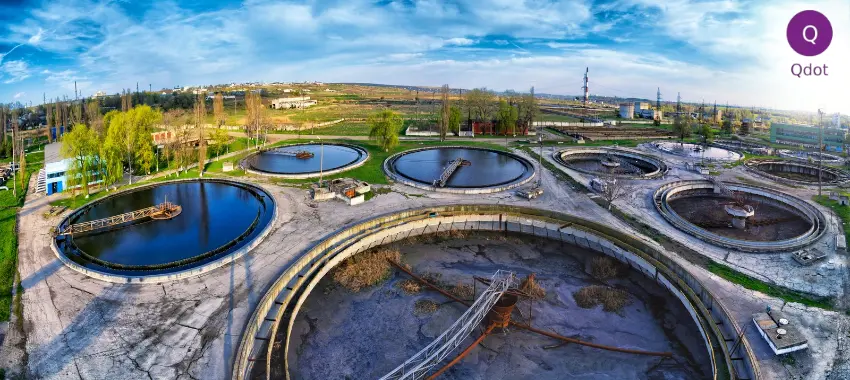
Utilities and environmental services operate under performance conditions that must be demonstrated continuously, not just during an annual inspection. Qdot helps providers in Oman develop management systems that tie permit obligations, sampling, equipment maintenance, operator competence and customer service together.
Water scarcity, treatment reliability and responsible waste management matter to Oman’s industrial and urban development. Facilities must identify the permits, discharge limits, waste handling permissions and technical obligations applicable to their exact activity, authority and location. A management system supports compliance assurance but does not grant licences.
Industry Segments We Serve
Potable and process water providers, wastewater treatment plants, desludging contractors, recycling operators, waste collection and sorting companies, environmental monitoring firms, desalination support contractors.
Key Industry Challenges
Water and environmental services must balance dependable service delivery with protection of people, equipment and the environment.
- Consistency of treatment or service outcomes. Monitoring, maintenance and operating practices affect service quality.
- Environmental and waste controls. Discharges, waste transport and disposal require suitable controls under applicable permissions.
- Health and safety exposure. Chemicals, confined spaces, mechanical equipment and field work present safety hazards.
- Operational continuity. Critical breakdowns, delayed maintenance and unreliable data can interrupt essential services.
A coordinated management system helps service providers organise responsibilities, maintain more reliable records and support operational and environmental improvement.
Relevant ISO Standards and Industry Frameworks
The most suitable standards depend on your operations, customer requirements and the scope of your business. Common options include:
- ISO 14001 consultancy in Oman: Environmental aspects, monitoring, permit-related processes and continual improvement.
- ISO 9001 consultancy in Oman: Sampling-related service accuracy, customer communication, maintenance and quality control.
- ISO 45001 consultancy in Oman: Worker risk controls in treatment, collection and field operations.
- ISO 50001 consultancy in Oman: Energy optimisation of pumping, blowers, compressors and other significant uses.
- ISO 17025 consultancy in Oman: Competence and technical controls for testing laboratories seeking accreditation.
How Qdot Supports Your Organisation
Qdot reviews the relevant treatment, collection, transfer or environmental service activities and the associated performance and compliance responsibilities.
- Clarify process responsibilities, environmental controls and incident arrangements.
- Help improve equipment, contractor and workplace safety management.
- Support integration of relevant ISO systems, internal audits and assessment readiness.
Our consultancy support can include gap assessment, management-system documentation, team training, implementation assistance, internal audits, management review and preparation for an independent external assessment, as appropriate to the agreed scope.
Why Choose Qdot?
Qdot has provided management-system consultancy across the GCC since 2016. We focus on systems that fit the organisation’s work, rather than generic documentation prepared only for an audit. Where several standards apply, we can help integrate overlapping requirements into one manageable approach.
Qdot is an independent consultancy, not an ISO certification or accreditation body. Independent bodies make certification and accreditation decisions; project, regulatory and customer approvals remain separate.
Request Industry-Specific ISO Consultancy in Oman
Tell us about your services, facilities or projects in Oman, the requirements raised by your customers and any existing management systems. Qdot can review the scope and propose an implementation and certification-readiness approach suitable for your organisation.
Frequently Asked Questions
No. Permits and discharge authorisations remain separate legal obligations.
It may be relevant if the facility operates a laboratory seeking accreditation for defined tests.
Yes, if roles, locations, risks and outsourced disposal interfaces are explicitly addressed.